


Description
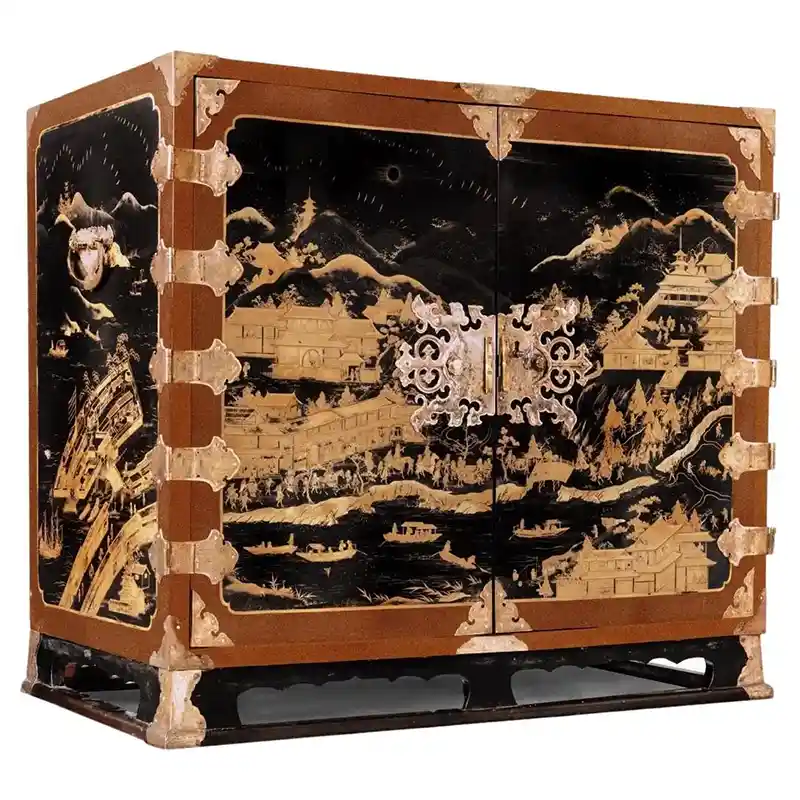
17th Century Japanese Export Lacquer Cabinet with Depiction the Dutch Tradepost
Introduction to the 17th Century Japanese Export Lacquer Cabinet with Depiction the Dutch Tradepost
The 17th Century Japanese Export Lacquer Cabinet with Depiction the Dutch Tradepost is an extraordinary work of Edo-period craftsmanship, dating circa 1660–1680.
More than a piece of furniture, this cabinet is a historical document in lacquer and gold, presenting vivid scenes of Dutch–Japanese relations during a time when Japan maintained strict control over foreign trade.
It is among the rarest surviving examples of export lacquer, embodying luxury, artistry, and the fascinating global story of commerce in the 17th century.
Collectors, museums, and connoisseurs of Japanese art will appreciate not only its exceptional detail but also its symbolic narrative of cultural exchange. To meet the needs of today’s global buyers, this cabinet can be acquired securely with Bitcoin, Ethereum, Tether, and other leading cryptocurrencies, combining timeless art with modern purchasing convenience.
17th Century Japanese Export Lacquer Cabinet with Depiction the Dutch Tradepost
The 17th Century Japanese Export Lacquer Cabinet with Depiction the Dutch Tradepost was created using the finest Japanese lacquer traditions. Artists employed hiramaki-e (flat sprinkled picture) and takamaki-e (raised sprinkled picture) techniques in gold and silver powders over a deep, polished roiro black lacquer ground.
The front doors display a continuous, intricate scene of the Dutch East India Company’s (VOC) tribute journey to Edo. Every figure, boat, horse, and building is rendered in extraordinary miniature detail.
The Dutch Opperhoofd, or chief merchant, is carried in a norimon palanquin, while attendants, musicians, and Japanese officials line the road. These lively images reflect the extraordinary skill of Edo-period lacquer artists in both narrative composition and technical execution.

The Depiction of the Dutch Tradepost at Deshima – 17th Century Japanese Export Lacquer Cabinet with Depiction the Dutch Tradepost
One of the most fascinating aspects of the 17th Century Japanese Export Lacquer Cabinet with Depiction the Dutch Tradepost is its portrayal of Deshima Island, the artificial island in Nagasaki Harbor that was home to the Dutch trading enclave.
The left door features Dutch flags flying proudly over anchored VOC fluyt ships. Surrounding waters are alive with small boats, fishermen, and Japanese figures going about their daily work. Cows graze on the island’s miniature fields, and flagpoles rise against the skyline.
The right door continues the narrative, showing the Dutch merchants traveling through mountain passes toward Edo, guarded and accompanied by Japanese officials.
Together, these depictions offer a complete, detailed, and historically faithful account of one of the most important diplomatic rituals in Tokugawa Japan.
Interior and Structural Features – 17th Century Japanese Export Lacquer Cabinet with Depiction the Dutch Tradepost
Opening the cabinet reveals ten rectangular drawers, each decorated with scenes of birds in flight, flowering trees, and idyllic landscapes. Even the reverse sides of the doors are meticulously ornamented with pagodas, thatched houses, and the majestic ho-oo phoenix.
Other important features include:
Engraved gilt copper mounts and brass handles, underscoring its luxury.
A robust 18th-century English japanned wood stand, blending Japanese artistry with European collecting history.
A discreet modern powder-coated steel frame for additional stability, ensuring preservation for generations to come.

Dimensions and Specifications 17th Century Japanese Export Lacquer Cabinet with Depiction the Dutch Tradepost
Height: 88 cm (34.65 in)
Width: 100.5 cm (39.57 in)
Depth: 54 cm (21.26 in)
Materials: Wood, lacquer, gold, silver, copper
Techniques: Hiramaki-e, takamaki-e, roiro lacquer
Interior: 10 drawers with lacquered landscapes and birds
Stand: 18th-century English japanned wood
Frame: Modern steel support
These proportions make the 17th Century Japanese Export Lacquer Cabinet with Depiction the Dutch Tradepost a commanding presence, ideal as both an art object and a functional cabinet.

Historical Context and Global Significance
The 17th century was a period of isolation for Japan, but trade with the Dutch continued under strict supervision. The VOC was the only European power allowed to trade, confined to Deshima, and compelled to send annual processions to Edo to reaffirm loyalty to the Shogun.
The 17th Century Japanese Export Lacquer Cabinet with Depiction the Dutch Tradepost illustrates this unique relationship, serving as a rare, tangible reminder of how art, commerce, and diplomacy intersected during the Edo period.
Comparable examples are found in the Dutch Royal Collection at Huis ten Bosch and in the Musée des Beaux-Arts in Dijon, yet this cabinet stands out for its narrative detail and exceptional preservation.
Provenance 17th Century Japanese Export Lacquer Cabinet with Depiction the Dutch Tradepost
This rare cabinet was held in an English private collection at Cliff Avenue, Cromer, Norfolk, since the 1950s, likely acquired from Margaret Jane Barclay, of the distinguished Barclay banking family.
Such provenance enriches the cultural and historical significance of this work, linking it to a lineage of serious collectors and connoisseurs of fine art. Luxury décor curated for refined taste. Add elegance, style, and sophistication to every corner of your home. Browse décor now.
A Collector’s Investment in Art and History
Owning the 17th Century Japanese Export Lacquer Cabinet with Depiction the Dutch Tradepost is more than acquiring furniture; it is an investment in history, art, and diplomacy.
The meticulous craftsmanship, vivid storytelling, and connection to global trade networks make it one of the most sought-after Japanese export artifacts of the Edo period.

Purchase 17th Century Japanese Export Lacquer Cabinet with Depiction the Dutch Tradepost with Cryptocurrencies
In today’s world, collectors expect flexibility and security when investing in rare art. This masterpiece can be purchased using Bitcoin, Ethereum, Tether, and other reputable cryptocurrencies, allowing international buyers to secure ownership seamlessly.
The ability to combine 17th-century artistry with 21st-century financial innovation makes this acquisition both timeless and forward-looking. see the badminton cabinet the original 1950 italy

Why the 17th Century Japanese Export Lacquer Cabinet with Depiction the Dutch Tradepost Matters
The 17th Century Japanese Export Lacquer Cabinet with Depiction the Dutch Tradepost embodies the finest traditions of Japanese lacquer art, while narrating one of the most intriguing chapters of global history.
Its exquisite design, rich storytelling, impressive provenance, and cultural importance position it as a true museum-quality piece.
For discerning collectors and institutions, this cabinet offers an unrepeatable opportunity: to own a masterpiece of Edo-period export lacquer, preserved in extraordinary condition, and available for purchase with both traditional methods and modern digital currencies.
This is more than an object; it is a bridge between worlds—Japan and Europe, art and diplomacy, past and present.
“Step into History with the 17th Century Japanese Export Lacquer Cabinet with Dutch Tradepost – Own a Masterpiece Today Using the World’s Most Trusted Cryptocurrencies!”






Reviews
There are no reviews yet.